Best cordless drills for woodworking: 2026 guide
Quick answer
For most furniture, cabinet, and finish-carpentry work, start with a brushless drill/driver that has a 1/2-inch chuck, two speed ranges, a useful clutch, and a compact battery. Stay on an existing battery platform unless another system solves a documented need. Add an impact driver for repeated structural fastening and choose a hammer drill only when approved masonry drilling is part of the job.
Common questions
- What cordless drill is best for woodworking?
- A compact brushless drill/driver with a 1/2-inch chuck, two speed ranges, a controllable clutch, and batteries that fit your other tools suits most woodworking. The right model depends on the holes, fasteners, access, weight, and battery platform—not the highest published torque number.
- Do woodworkers need an impact driver?
- Not for every job. A drill/driver accepts a broad range of drilling bits and offers clutch control for screws. An impact driver is useful for repeated long or structural fasteners, but its impacts, noise, and 1/4-inch hex collet make it less suitable for many boring and delicate hardware tasks.
- Should I buy a hammer drill for woodworking?
- Buy a hammer drill/driver when renovation work includes approved drilling in masonry. For furniture, cabinets, trim, and ordinary wood boring, a standard drill/driver is usually lighter and simpler. Never use hammer mode with ordinary wood bits.
Source note: This guide was checked on October 26, 2026, against current DeWalt, Milwaukee, Makita, and Ryobi product documentation plus an independent September 2026 woodworking drill test. The Carpenter's Guide did not handle or performance-test these drills.
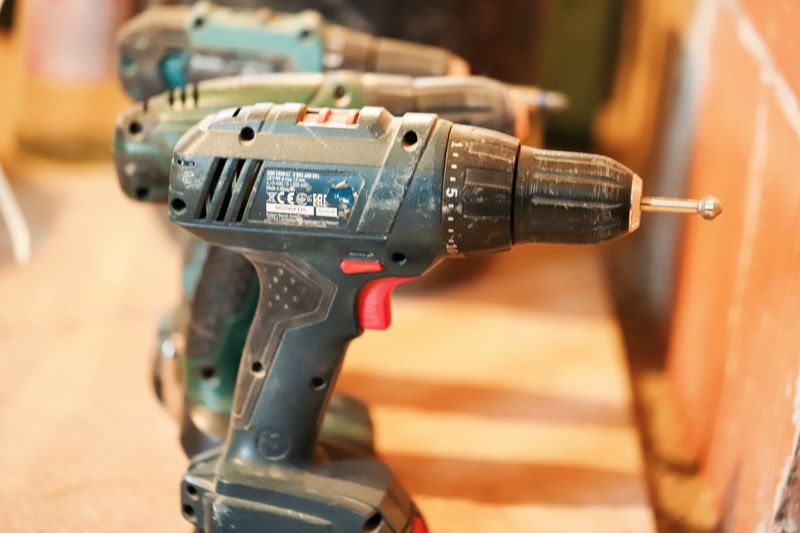
For most woodworking, the right cordless drill is a compact drill/driver on a battery platform you already own. Look for a 1/2-inch chuck, two mechanical speed ranges, a controllable clutch, and a battery small enough that the tool remains balanced during cabinet and hardware work.
Do not select on maximum torque alone. Large holes in dense stock demand capacity and bind-up planning, but most shop work rewards a shorter head, predictable trigger, low-speed control, secure chuck, and less weight.
Cordless drill shortlist at a glance
| Current model | Best fit | Chuck and control | Size and ergonomic consideration | Safety or bind-up consideration | Who should skip it |
|---|---|---|---|---|---|
| DeWalt DCD800B | Existing 20V MAX users who want an XR drill/driver for varied shop and site work | 1/2-inch chuck; two speeds to 2,000 RPM | Compact head; choose pack size around access and endurance | No electronic anti-rotation feature is stated on the cited product page; plan reaction torque | Buyers who only need light assembly in tight cabinets |
| DeWalt DCD794B | Compact cabinet, hardware, and finish work on 20V MAX | 1/2-inch ratcheting chuck; up to 1,650 RPM | 5.88-inch tool-head length; compact bare tool | Use the clutch and two-hand control; do not treat compact size as protection from bind-up | Repeated large-bore work that justifies a side handle or anti-rotation control |
| Milwaukee 2903-20 | M18 users drilling larger holes or working in demanding stock | 1/2-inch all-metal chuck; mechanical clutch; published 1,400 in-lb maximum | 6.9-inch length; supplied side handle adds control | AutoStop control is designed to limit over-rotation in a bind-up | Light-duty users who value minimum weight over high capacity |
| Makita XFD15ZB | Compact furniture, cabinet, and overhead work on 18V LXT | 1/2-inch chuck; 0–500 and 0–1,700 RPM | 5-7/8 inches long; 2.9 lb with battery | Electric brake; no anti-rotation claim on the cited page | Large self-feed bits or heavy structural drilling as the primary job |
| Ryobi PBLDD02B | ONE+ owners who want a current full-size drill/driver | 1/2-inch ratcheting metal chuck; 24-position clutch; two speeds | Auxiliary handle helps control higher-load work | Use the supplied auxiliary handle for demanding applications | Buyers who need a shorter compact head or a professional service network requirement |
These are documented use-case fits, not a lab ranking. Most links are bare-tool models; batteries, chargers, side handles, cases, and kit suffixes vary. Retail price and bundle contents change too quickly to serve as selection evidence here.
How this shortlist was prepared
The Carpenter’s Guide did not handle, drill with, or instrument-test these tools. We checked live manufacturer pages and manuals for current model status, chuck size, speed range, published dimensions, weight where available, clutch and braking controls, bind-up features, and kit contents. We removed older DCD791D2, DCK299D1W1, Milwaukee 2804-22, and Ryobi PBLDD01 recommendations rather than presenting them as the current default.
For independent context, we reviewed Popular Woodworking’s September 2026 cordless-drill test. Its team bored holes and drove screws with 15 current drills, and explicitly noted that a useful shop drill may stand out through weight and features rather than maximum output. We use that principle in the matrix, but do not transfer its winners or test results to untested models.
Source status: Product documentation and availability were checked October 26, 2026. Confirm the exact model, type number, regional version, and kit contents before buying.
Drill/driver, hammer drill, or impact driver?
Drill/driver: the woodworking starting point
A drill/driver uses a three-jaw chuck for twist bits, brad-point bits, countersinks, Forstner bits, and many hole saw arbors. Its adjustable clutch can limit driving torque for hardware and small screws. Select drill mode for boring and a suitable clutch setting for fastening.
This is the first tool for furniture, cabinets, jigs, trim, and general carpentry. A 1/2-inch chuck broadens shank compatibility, but the tool’s manual and bit maker still set the allowable diameter and application.
Hammer drill/driver: add masonry only when the work requires it
A hammer drill/driver adds axial percussion for compatible masonry bits in materials allowed by its manual. It is relevant to remodeling when anchors must go into brick, block, or concrete.
Hammer mode is not a shortcut for wood. It can damage the work, the bit, or both. If masonry work is rare, compare the added size and weight with renting or using a dedicated tool.
Impact driver: repeated fastening, not general boring
An impact driver accepts 1/4-inch hex accessories and adds rotational impacts as resistance rises. It is useful for repeated structural screws and long fasteners, while a drill/driver keeps a pilot bit ready.
It is not a replacement for a drill chuck or a license to overdrive fasteners. Use impact-rated accessories, follow the fastener and connector specifications, and switch to a controlled drill/driver or hand tool for delicate hardware.
Choose the battery platform before the model
Batteries and chargers usually do not interchange across brands, and sometimes not across voltage families from the same brand. Inventory what you already own, including battery age, capacity, charger location, and tools you realistically expect to add.
Stay on the existing platform when it meets the work. Change only for a documented reason such as a required anti-rotation feature, a much shorter body, service availability, or a future tool that is missing from the current system.
Do not rely on a universal “full day” runtime statement. Runtime changes with pack capacity and condition, hole diameter and depth, material, speed, feed, temperature, and how often the tool stalls. Balance can also worsen when a large pack is attached to a compact drill.
Current drill options by use case
DeWalt DCD800B: an XR general-purpose option
DeWalt’s current drill-driver catalog lists the DCD800 family, and the DCD800B product page specifies a brushless 1/2-inch drill/driver with up to 2,000 RPM. DeWalt says its head is half an inch shorter than the earlier DCD791 generation.
Choose it when you already own 20V MAX batteries and need one drill for broader work. If cabinet access and light assembly dominate, compare the DCD794B before assuming more published output is more useful.
DeWalt DCD794B: compact access on 20V MAX
The DCD794B has a 5.88-inch tool-head length, a 1/2-inch ratcheting chuck, and a published no-load maximum of 1,650 RPM. Its compact body can reduce interference inside cabinets and between framing members.
It is not the automatic choice for the largest self-feed bits. Compact dimensions do not remove reaction torque; stay within the exact manual’s capacity and use a stance that does not trap the tool or your hand.
Milwaukee 2903-20: high-capacity M18 drill/driver
Milwaukee lists a 1/2-inch all-metal chuck, mechanical clutch, 6.9-inch length, side handle, and AutoStop control on the 2903-20. The maker publishes 1,400 in-lb maximum torque, but that number is not directly comparable with another brand’s different test method.
The practical reason to shortlist this model is the combination of M18 compatibility, a supplied control handle, and bind-up response. It remains a heavier-duty choice than many furniture tasks require.
Makita XFD15ZB: compact LXT shop drill
Makita specifies a 5-7/8-inch body, 2.9-pound weight with battery, 1/2-inch chuck, and two speed ranges of 0–500 and 0–1,700 RPM. The bare-tool XFD15ZB does not include a battery or charger; Makita’s kit suffixes differ, and at least one older kit is marked discontinued on its site.
This is the use-case fit for an LXT owner prioritizing access and low carried weight. Check whether its published wood capacity and torque suit the actual bit sizes in your shop.
Ryobi PBLDD02B: current ONE+ full-size option
Ryobi marks the older PBLDD01B discontinued and lists the PBLDD02B as the current generation. The current page specifies a 1/2-inch metal chuck, 24-position clutch, two-speed gearbox to 2,150 RPM, and an auxiliary handle.
It belongs on the list for an existing ONE+ owner. Ignore manufacturer percentage comparisons unless you review their exact baseline and test conditions; the chuck, control layout, pack fit, service route, and project demands are the buying facts that transfer to your shop.
Chuck, speed, and control matter more than headline torque
Use low gear for large-diameter boring and controlled fastening, and high gear for smaller holes within the bit and tool instructions. Do not keep a stalled drill pinned at full trigger; release it, isolate power, and correct the bind.
The clutch is for fastening, not an engineering torque setting. Start low on representative scrap and increase only until the fastener seats as required. Material density, pilot size, screw coating, thread geometry, battery state, and tool dynamics all affect the result.
Inspect the chuck jaws and bit shank before every setup. Insert the bit to the depth specified by the manual, tighten it evenly, and remove the chuck key on keyed tools. A 1/2-inch chuck opening does not mean every large accessory is safe for that drill.
Pre-purchase checklist
- List real tasks: pilot holes, hinges, pocket screws, Forstner-bit sizes, hole saws, structural screws, or masonry anchors.
- Inventory batteries: record compatible packs, chargers, age, capacity, and replacement availability.
- Check access: measure the tightest cabinet, joist, or hardware location, including the chosen bit.
- Verify capacity: compare the largest bit and material with the exact manual, not a retailer category.
- Plan reaction control: look for a side handle, anti-rotation mode, neutral stance, and room for the tool to move safely if it binds.
- Compare kits by contents: tool, batteries, charger, handle, belt hook, case, and warranty—not a temporary price alone.
- Handle the tool: install the expected battery and check trigger reach, direction switch, clutch ring, chuck, balance, and overhead comfort.
Safe setup for woodworking
Clamp the work. A handheld board can spin, lift, or pull the bit off line. Mark hidden utilities before drilling installed work, and keep the bit path clear on the far side.
Use the bit type, speed, and feed specified for the material. Large self-feed and hole-saw work can produce strong reaction torque; use the side handle and anti-rotation feature where provided, maintain stable footing, and keep your face and body out of the tool’s possible rotation path.
Wear eye protection, manage hearing and dust exposure, and remove the battery before clearing a jam or touching the chuck. For repeatable joinery holes, the drill press buying guide may be a better next comparison than buying a more powerful handheld drill.
Sources and scope
Model status and specifications were checked October 26, 2026 against:
- DeWalt DCD800B product page, DCD794B product page, and current drill-driver catalog
- Milwaukee 2903-20 product page and 2903/2904 operator’s manual
- Makita XFD15ZB product page
- Ryobi PBLDD02B product page and the discontinued PBLDD01B page
- Popular Woodworking September 2026 cordless-drill test
Published values use different manufacturer methods and are not proof of cross-brand superiority. The exact manual, accessory instructions, and work requirements control.
Your next step
Write down your existing platform, largest hole and fastener, tightest access, expected daily carry time, and whether masonry work is real or hypothetical. Eliminate any drill whose manual does not cover the work, then handle the finalists with the battery you plan to use.
Pair the drill decision with the jigsaw selection guide and circular saw comparison before committing to a new battery ecosystem. For the first project, the pocket-hole joinery guide explains where controlled drilling and driving fit into an actual assembly.

The Carpenter's Guide Editorial Team
Independent trade-focused editorial team